

Table of Contents
I know what it feels like to sit alone and wonder, “Why do I feel like everyone hates me?” These thoughts can be exhausting, and sometimes they sneak in even when nothing has gone wrong. We might replay conversations in our heads, worry about being left out, or assume people dislike us without real proof.
We live in a world where social rejection hurts deeply. Studies on social rejection and perception show that being excluded activates the same brain pathways as physical pain. So if you’ve been feeling this way, you’re not weak or dramatic it’s a very human experience.
How Past Experiences Shape These Feelings
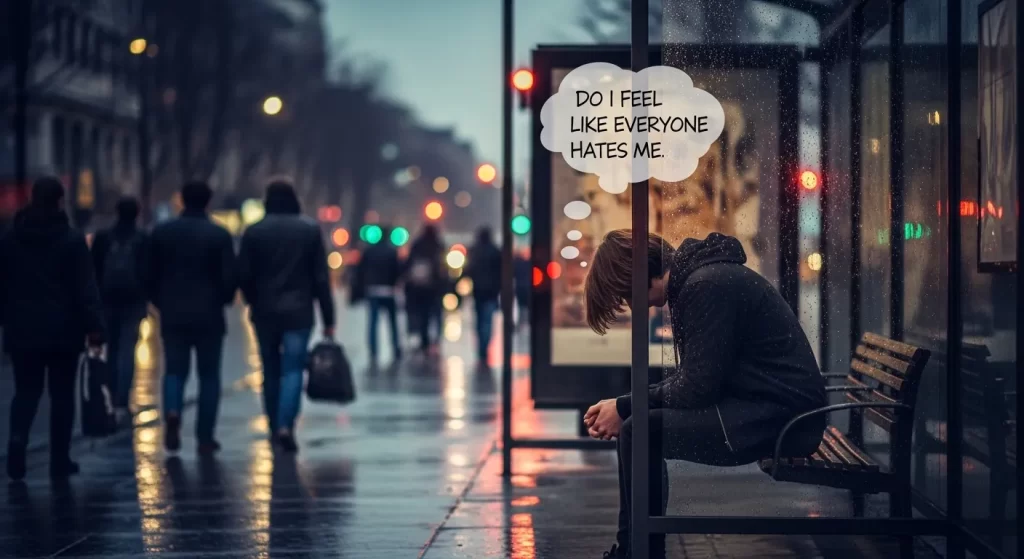
We often carry memories of rejection, bullying, or being left out. These past wounds can make us overly sensitive to even small signs of disapproval. For some, the thought “everyone hates me” may start as an angsty teenage reaction but grow into a real belief shaped by painful experiences.
When these memories stay unhealed, they can distort how we see present relationships. Instead of noticing positive interactions, we may only focus on the negative ones.
The Role of Self-Esteem and Insecurity
Many times, low self-esteem is at the core. If I don’t feel good about myself, it’s easy to project that onto others and assume they see me negatively too. Insecurity whispers that everyone is judging us, even when they aren’t.
You might want to explore strategies for improving self-esteem, because how we view ourselves strongly influences how we think others see us.
How Loneliness and Isolation Play a Part
When we spend too much time alone, we naturally start to feel like we’re unwanted. Loneliness itself can fuel thoughts of rejection. I’ve noticed that when I isolate, the cycle becomes stronger: less interaction leads to more assumptions of being disliked, which leads to pulling away even further.
These patterns can be broken by slowly reaching out, even if it feels uncomfortable at first.
Distorted Thinking Patterns That Trick Us
Cognitive distortions are inaccurate thinking habits that make situations seem worse than they are. According to a 2015 review, they’re like “a lie our brain sends to our conscious mind.” Some common ones include:
- Mind reading: Believing we know what others think (“They must hate me”).
- Ignoring the positive: Overlooking kindness and focusing only on slights.
- All-or-nothing thinking: Seeing situations in extremes (“Everyone hates me or everyone loves me”).
- Jumping to conclusions: Assuming the worst without evidence.
- Personalization: Blaming ourselves for things we had no control over.
- Overgeneralizing: Applying one negative experience to every situation.
Our guide on cognitive distortions offers practical ways to challenge these harmful patterns.
The Difference Between Perception and Perspective
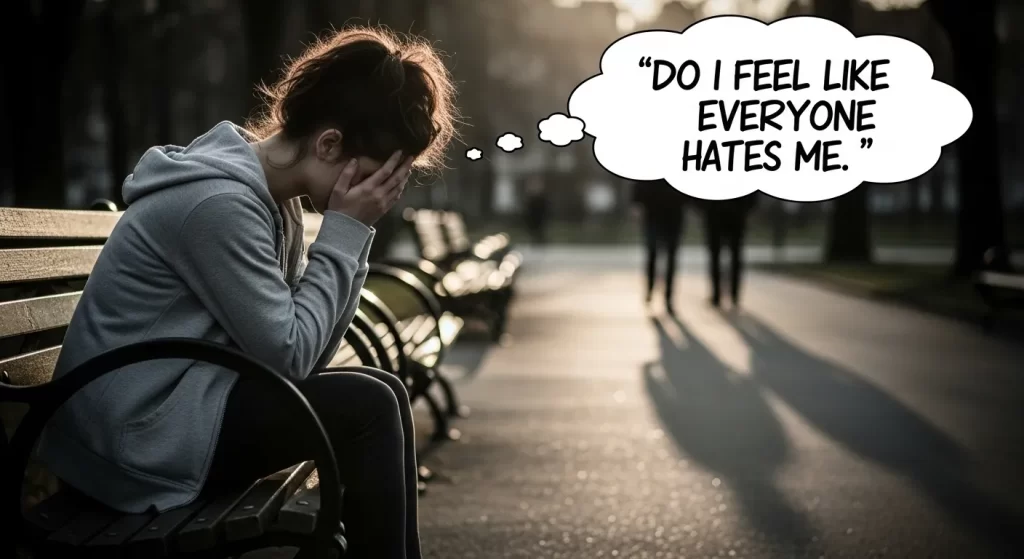
Sometimes I confuse what I perceive with the bigger perspective. Perception is the story my brain tells me about an event, but perspective is the wider view. If someone doesn’t reply to a text, my perception might say, “They’re ignoring me because they dislike me.” But perspective could remind me that they may be busy, tired, or dealing with their own struggles.
The American Psychological Association explains that beliefs shape perception, and those beliefs come from repeated thoughts or emotional experiences. That means we can slowly reshape them by practicing healthier patterns.
Why Sensitivity Plays a Role
Some people are simply more sensitive to social signals. Research on Highly Sensitive Persons (HSPs) shows that they experience stronger emotional reactions when they feel ignored or rejected. If you’re socially hypersensitive, small moments like a delayed response or lack of eye contact might feel huge.
Knowing this about yourself can help you approach these feelings with more compassion.
Common Triggers Behind These Thoughts
We often find ourselves asking “why” when the truth is, there’s rarely one reason. Here are some common triggers:
- Physical exhaustion (being tired, hungry, or stressed).
- The wrong social circle (toxic or unsupportive friends).
- Social media comparisons (doomscrolling and feeling left out).
- Systemic issues (racism, prejudice, discrimination leading to shame and insecurity).
- Bullying and herd mentality (when groups reinforce exclusion).
Each of these can feed into the feeling of being disliked, even when reality is more complex.
When Mental Health Conditions Are Involved
Sometimes these feelings aren’t just passing thoughts—they may be linked to deeper conditions.
- Social anxiety disorder: Fear of judgment or embarrassment is a hallmark.
- Depression: Low mood and hopelessness can fuel negative self-beliefs.
- Personality disorders: Some involve paranoia or distrust of others.
- ADHD with rejection-sensitive dysphoria: Strong fear of rejection.
- OCD/ROCD: Obsessive fears about being disliked.
If you see yourself in these patterns, professional help may be an important step. Read more on NHS mental health advice for practical resources.
Healthy Ways to Respond to These Thoughts
I’ve learned that the best approach is to balance logic with self-compassion. Here are key strategies:
- Look for the facts
- Write down evidence both for and against your belief.
- Keep a “win file” of small positive interactions.
- Challenge irrational thoughts
- Ask, “What else could explain this?”
- Put yourself in their shoes before jumping to conclusions.
- Check your physical needs
- Eat well, hydrate, rest, and relax. Physical care supports emotional health.
- Practice self-compassion
- Focus on strengths, not flaws.
- Engage in self-care activities like hobbies, exercise, or meditation.
- Seek support
- Talk openly with friends, mentors, or family.
- Believe people when they reassure you.
- Limit harmful triggers
- Reduce social media use.
- Surround yourself with genuinely supportive people.
Learn more about managing social anxiety to see how these practices connect to bigger mental health tools.
Simple Daily Actions to Build Connection
Even small changes in how we interact can make a difference:
- Show genuine interest in others.
- Smile and use people’s names.
- Listen more than you talk.
- Offer thoughtful compliments.
- Avoid arguments and focus on understanding.
- Admit mistakes quickly.
These actions build goodwill while also reminding you that you do have influence over how people experience you.
When It’s Time to Ask for Professional Help
If these thoughts are constant, overwhelming, or affecting your daily life, therapy is a powerful step. Cognitive Behavioral Therapy (CBT) and Exposure and Response Prevention (ERP) are proven methods to reduce irrational beliefs and help manage fears.
If you’re struggling, an online screening may be a starting point, but don’t hesitate to seek real-life professional support.
Final Thoughts
We often ask ourselves, “Why do I feel like everyone hates me?” when our brains trick us with distorted thoughts, past wounds, or deep insecurities. But those feelings are not the whole truth. By learning to spot distortions, practicing self-compassion, and seeking support, we can shift the story we tell ourselves.
Remember: you don’t need to be liked by everyone to have value. The goal isn’t to erase the thought completely it’s to gain perspective, manage it with healthier tools, and move toward connections that truly matter.
FAQs
What does it mean when you think everyone hates you?
It often reflects low self-esteem, anxiety, or distorted thinking, not reality.
What is the disorder where you think everyone hates you?
It may relate to social anxiety, depression, OCD, or personality disorders, not always a formal diagnosis.
What’s the word for feeling like everyone hates you?
This feeling is often called rejection sensitivity or linked to paranoia.
Is thinking everyone hates you BPD?
It can occur in Borderline Personality Disorder but is also common in anxiety, depression, or rejection-sensitive dysphoria.
References
- American Psychological Association. Perception and perspective in mental health. https://www.apa.org
- NHS. Mental health advice and resources. https://www.nhs.uk/mental-health
- 2015 Review of Research on Cognitive Distortions. Cognitive distortions as “lies the brain tells the mind”.
- Studies on Social Rejection and Perception. Neural pathways activated by social exclusion.
- Research on Highly Sensitive Persons (2018). Emotional reactivity to social rejection.
- Learn more about managing social anxiety. https://www.nimh.nih.gov/health/publications/social-anxiety-disorder-more-than-just-shyness
- Explore strategies for improving self-esteem. https://www.psychologytoday.com/us/basics/self-esteem
- Our guide on cognitive distortions. https://www.verywellmind.com/what-are-cognitive-distortions-2330509
Disclaimer: This article is for informational purposes only and not a substitute for professional medical advice. Seek a qualified expert if you need help.
Author: Ben Dawson
Ben Dawson is a mental health writer and wellness educator with years of experience simplifying complex psychology. He focuses on practical, compassionate strategies for everyday life.