
Table of Contents
Why does access to education in Kenya and Sudan differ so sharply? Despite sharing geography and history as former British colonies, these two East African nations have taken very different paths when it comes to schooling.
Education is the cornerstone of social mobility and national development, yet millions of children in Sudan remain out of school while Kenya has made notable progress.
This article explores the key causes behind the education gap, from political stability to cultural norms, funding, gender equity, infrastructure, and the impact of conflict.
By the end, you’ll understand why access to education looks so different in these neighboring countries and what must be done to bridge the divide, Why Does Access to Education in Kenya and Sudan Differ?
A Tale of Two Nations: Kenya vs. Sudan
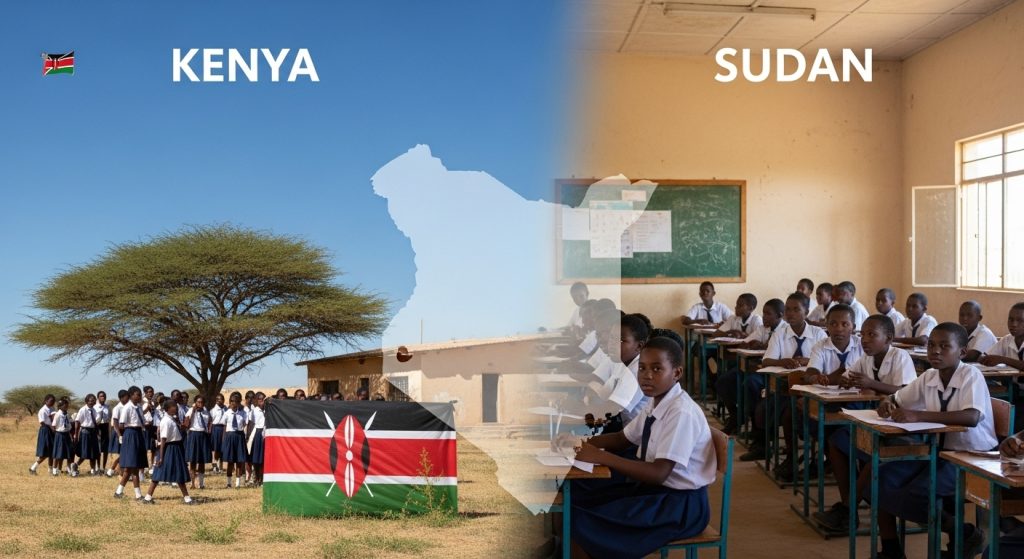
Both countries emerged from colonial rule in the mid-20th century. Kenya gained independence in 1963, while Sudan achieved it in 1956. But the decades that followed set them on divergent educational journeys.
- Kenya’s path: Relatively stable governance allowed consistent investment in schools and long-term reforms.
- Sudan’s path: Prolonged civil wars, political unrest, and resource mismanagement eroded its education system and displaced millions of families.
The result? Today, Kenya boasts one of the highest primary school enrollment rates in Africa, while Sudan continues to grapple with one of the largest out-of-school populations in the world, Why Does Access to Education in Kenya and Sudan Differ?
How Political Stability Shapes Access to Education
Political conditions create the foundation for learning. Kenya’s steady system since 1963 enabled continuous development of schools. By contrast, Sudan’s decades of instability shattered progress.
- Kenya’s Stability: Government institutions function consistently, enabling nationwide initiatives such as Free Primary Education (2003) that pushed enrollment past 8 million children.
- Sudan’s Instability: Civil wars, the 2018 youth uprising, and the 2023 conflict forced schools to shut down or be repurposed as shelters. As of 2023, 19 million children are out of school in Sudan.
In war-torn regions like Darfur, classrooms often double as refugee housing, halting education entirely, Why Does Access to Education in Kenya and Sudan Differ?
Funding: Money Matters in Education
No country can provide strong education without adequate funding. Here, Kenya and Sudan differ dramatically.
- Kenya’s Investment: Education receives about 17% of the national budget, translating into building schools, paying teachers, and rolling out digital literacy programs.
- Sudan’s Shortfall: Only 9% of the budget is directed to education, with higher priority given to security spending. This leaves schools underfunded, teachers unpaid, and classrooms ill-equipped.
On a per-student basis, UNESCO estimates Kenya spends nearly $300 annually, while Sudan spends less than $50. Such disparity explains why Kenyan children receive laptops in some schools while Sudanese children lack basic textbooks, Why Does Access to Education in Kenya and Sudan Differ?
Language and Cultural Barriers
The language of instruction has a powerful effect on student retention.
- Kenya’s Approach: Bilingual teaching in English and Kiswahili fosters inclusivity and national unity. Minority groups can still participate fully.
- Sudan’s Challenge: An Arabic-only system marginalizes non-Arabic speakers, particularly in rural and minority regions.
In Sudan’s Blue Nile state, non-Arabic speakers face dropout rates of nearly 40% because they cannot understand classroom instruction. This barrier creates a cycle of exclusion for ethnic minorities, Why Does Access to Education in Kenya and Sudan Differ?
Gender Gaps in Education
Cultural expectations around gender further separate the two nations.
- Kenya’s Progress: 83% of girls enroll in primary school, and bursaries plus NGO campaigns help keep them in secondary education.
- Sudan’s Barriers: Early marriage, poverty, and patriarchal traditions leave one in three girls out of school. Only 48% make it to secondary education.
For instance, a girl in Kenya’s Turkana region may receive government or NGO support to stay in school, while a girl in Sudan’s Darfur region may be forced into early marriage instead of finishing her studies, Why Does Access to Education in Kenya and Sudan Differ?
Infrastructure and School Conditions
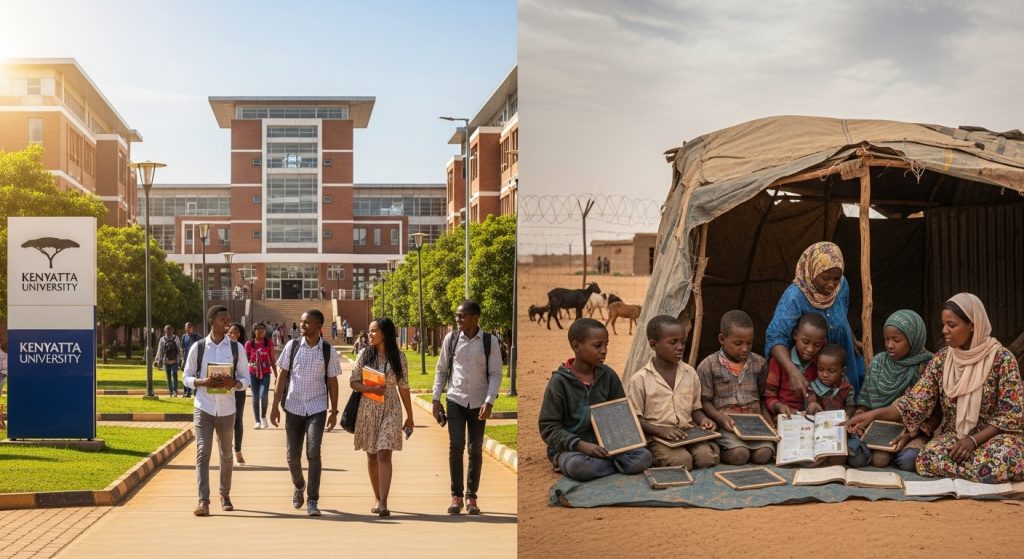
The quality of school facilities directly affects learning outcomes.
- Kenya’s Advantage: Most urban schools feature modern classrooms, libraries, and internet access.
- Sudan’s Reality: Nearly half of schools lack clean water. Many rural schools are damaged or used as emergency shelters. In South Sudan (formerly part of Sudan), some students still study under trees due to destroyed buildings, Why Does Access to Education in Kenya and Sudan Differ?
Quick Comparison Table
| Factor | Kenya | Sudan |
|---|---|---|
| Schools with clean water | ~80% | ~52% |
| Access to electricity | ~70% | <30% |
| Digital tools (laptops/tablets) | Expanding | Rare |
Teachers: The Backbone of Education
Quality teachers determine classroom success.
- Kenya’s System: The Teachers Service Commission ensures recruitment, training, and regular professional development. Salaries are relatively stable.
- Sudan’s Crisis: Teacher shortages are severe. Many go unpaid for months, prompting them to leave the profession. Ongoing conflict drives others away from classrooms entirely.
The contrast is stark: A Kenyan teacher may attend annual workshops on pedagogy, while a Sudanese teacher might abandon the profession to find stable income, Why Does Access to Education in Kenya and Sudan Differ?
Technology’s Uneven Role
Digital literacy is a cornerstone of modern education.
- Kenya’s Innovation: The Digital Literacy Program equips millions of students with laptops and access to e-learning platforms. Urban schools increasingly integrate technology into daily lessons.
- Sudan’s Lag: War has destroyed internet infrastructure. Online learning is almost impossible outside major cities, and even there, access is limited.
In Nairobi, students might log into e-learning platforms, while in Khartoum, many lack even a functioning school building, Why Does Access to Education in Kenya and Sudan Differ?
How Conflict Limits Access to Education in Sudan vs. Kenya
Conflict remains the single largest disruptor of learning.
- Kenya’s Refugee Integration: Camps like Dadaab incorporate refugee children into formal education through Education in Emergencies programs.
- Sudan’s Ongoing Crisis: Over 10 million people displaced by war including 2 million who fled abroad miss out on education altogether.
Take the story of Ibrahim, a top student from North Kordofan, who was forced to abandon his studies when violence erupted in 2023. His Kenyan peers, by contrast, continue their education with fewer interruptions, Why Does Access to Education in Kenya and Sudan Differ?
Community and Tradition: Attitudes Toward Learning
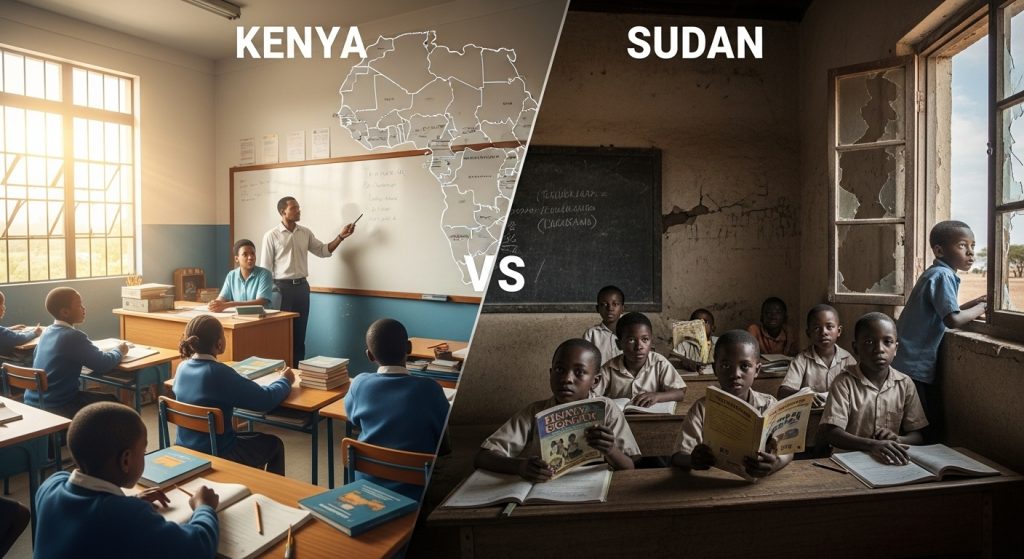
Local beliefs strongly shape enrollment.
- Kenya’s Outreach: Community campaigns and NGOs like FAWE promote girls’ education and challenge harmful practices.
- Sudan’s Struggles: Traditional norms prioritize boys’ education. Early marriage and domestic labor often keep girls at home.
Projects by organizations such as Save the Children try to shift attitudes, but cultural change is slow, Why Does Access to Education in Kenya and Sudan Differ?
Looking Ahead: What Each Country Needs
Both Kenya and Sudan face education challenges, but their priorities differ.
- Kenya’s Next Steps: Improve quality in underserved rural areas like Turkana and Mandera, ensuring equity across the country.
- Sudan’s Urgent Needs: End conflict, rebuild schools, and redirect funding to education. Without peace, reforms cannot succeed.
International support is vital. UNICEF’s Alternative Learning Programme provides second-chance education for Sudanese children, but lasting progress requires systemic reform and stability, Why Does Access to Education in Kenya and Sudan Differ?
Final Thoughts
So, why does access to education in Kenya and Sudan differ? The answer lies in a mix of political stability, government investment, cultural practices, language, gender equality, infrastructure, and the devastating impact of conflict.
- Kenya’s consistent reforms and funding have created opportunities for millions.
- Sudan’s instability and underfunding have left nearly an entire generation at risk of missing out on schooling.
The future of both nations depends on how they address these challenges. By supporting peacebuilding in Sudan and improving rural education in Kenya, we can help ensure that every child has the chance to learn.
👉 To support education initiatives in both countries, visit UNICEF’s website.
FAQs
Why does access to education in Kenya and Sudan differ?
Access to education differs due to political stability, government funding, cultural practices, language barriers, and ongoing conflict. Kenya has invested steadily in schools, while Sudan struggles with war and underfunding.
What role does conflict play in Sudan’s education crisis?
Conflict has displaced millions of families in Sudan, destroyed school infrastructure, and forced classrooms to become shelters. As a result, nearly 19 million children are out of school.
How has Kenya improved access to education since independence?
Kenya introduced Free Primary Education in 2003, expanded teacher training, and invested in digital literacy programs. These policies boosted enrollment to over 8 million children.
What are the biggest challenges for girls’ education in Sudan?
Girls in Sudan face early marriage, cultural restrictions, and poverty. Only 48% reach secondary school, compared to 83% of girls enrolled in Kenya’s primary schools.
How does language affect access to education in Kenya and Sudan?
Kenya’s bilingual approach (English and Kiswahili) encourages inclusivity, while Sudan’s Arabic-only instruction excludes minority-language speakers, leading to high dropout rates in rural areas.