Table of Contents
Technology shapes nearly every part of modern life from how we connect with friends to how we work, learn, and relax. But with constant notifications, endless social media feeds, and late-night screen time, many people are asking the same question: how does technology affect mental health?
The answer isn’t simple. Technology can strengthen relationships, provide access to therapy, and boost mindfulness. But it can also increase anxiety, fuel comparison, and disrupt sleep. This article explores the double-edged impact of technology on mental health the risks, rewards, and how to strike a healthy balance.
Social Media and Mental Health: Connection vs. Anxiety
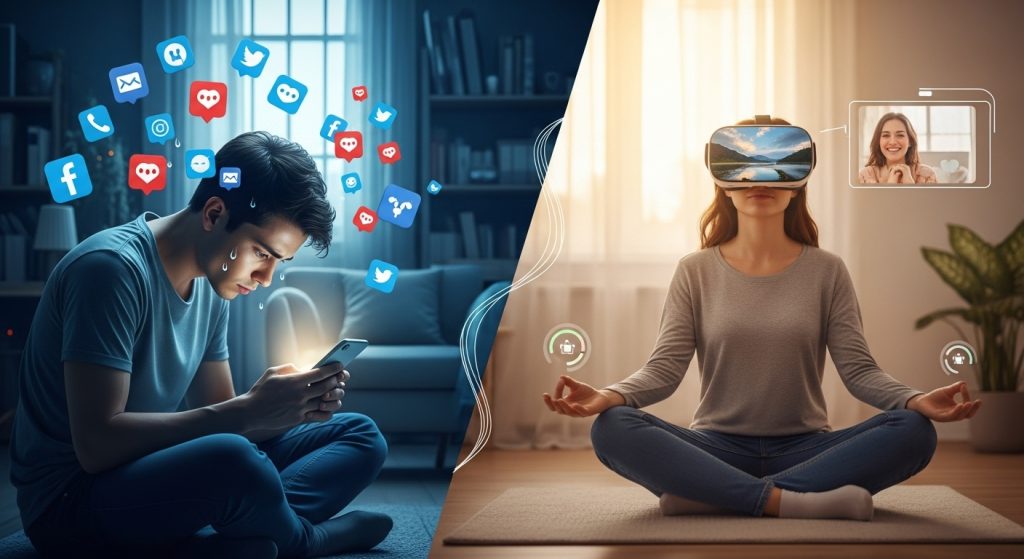
Social media platforms allow us to stay connected across distances, share life updates instantly, and find communities around shared interests, how does technology affect mental health?
- Positive side: Research from the Pew Research Center shows that 81% of teens feel more connected to friends through social media. Apps like WhatsApp or FaceTime bring families closer, especially across long distances.
- Negative side: Excessive notifications and pressure to “stay online” can lead to stress and anxiety. A 2022 American Psychological Association report found that frequent social media use correlates with higher rates of anxiety and depression, especially among young adults.
Example: Sarah, a college student, enjoys chatting with hometown friends online but struggles when group chats keep her up at night.
Takeaway: Social media fosters connection, but setting boundaries such as muting late-night notifications is crucial for protecting mental health, how does technology affect mental health?
Doomscrolling and Its Impact on Mental Health
The endless habit of “doomscrolling” consuming negative news online has become widespread, especially since the COVID-19 pandemic.
- Emotional impact: A University of Texas study linked doomscrolling to increased stress, fear, and sadness. Exposure to negative headlines triggers heightened cortisol levels, which worsen anxiety.
- Time drain: People often spend hours scrolling without realizing, stealing time from sleep, exercise, or hobbies that support mental well-being.
Example: Mark noticed his mood darken after spending hours reading distressing news on X (formerly Twitter). By setting a 20-minute daily news limit, he regained balance.
Tip: Use app timers or browser blockers to prevent excessive scrolling and protect emotional health, how does technology affect mental health?
Social Media Comparisons and Self-Esteem
Social platforms often highlight curated, polished lives from influencers posting flawless selfies to friends sharing travel highlights.
- The comparison trap: A 2021 Instagram internal study (leaked via the Wall Street Journal) revealed that one in three teenage girls reported worsened body image from Instagram use.
- Mental toll: Constant comparison reduces self-worth and creates unrealistic expectations.
Example: Emma found herself feeling unworthy after scrolling through fitness influencers’ posts. Her mood improved when she shifted to following more authentic, relatable accounts.
Takeaway: Curating your feed to focus on positive, realistic voices can protect self-esteem and encourage healthier digital habits, how does technology affect mental health?
How Screen Time Affects Sleep and Mental Health
Screens have become part of daily routines, but using them before bed has consequences.
- Sleep disruption: Blue light emitted from devices suppresses melatonin production, delaying sleep. The Harvard Medical School reports that two hours of screen exposure at night can reduce melatonin by up to 23%.
- Mental health effects: Poor sleep is linked to irritability, difficulty concentrating, and a higher risk of anxiety or depression.
Example: Jake struggled with insomnia after late-night gaming but improved his sleep when he set a “no screens after 10 p.m.” rule.
Tip: Use blue-light filters, turn on “night shift” modes, or swap scrolling for a book in the evening to protect both sleep and mental health, how does technology affect mental health?
The Rise of Digital Fatigue
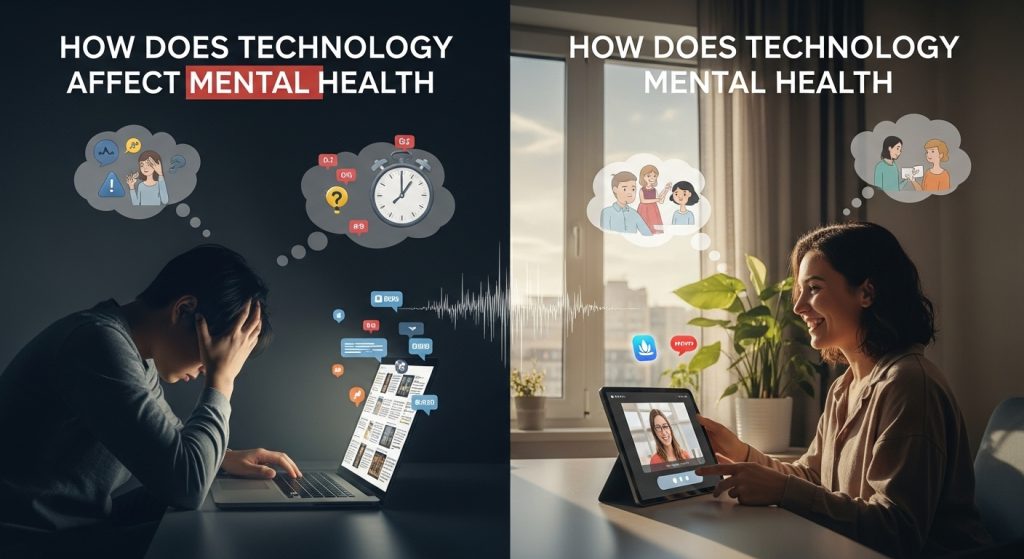
Remote work and online learning have increased reliance on video calls and digital collaboration tools. While convenient, this comes with its own form of exhaustion often called “Zoom fatigue.”
- Cognitive overload: A Stanford study in 2021 found that extended video calls increase brain fatigue because the brain works harder to interpret facial expressions and social cues.
- Social disconnect: Digital meetings lack the natural rhythm of in-person conversations, leaving people feeling drained and isolated.
Example: Lisa, a remote worker, noticed she felt mentally exhausted after hours of video meetings. She regained energy by scheduling short breaks and switching some meetings to phone calls.
Takeaway: To reduce digital fatigue, schedule breaks, limit consecutive video calls, and blend online with offline interactions, how does technology affect mental health?
Technology and Relationships: Closeness vs. Loneliness
Technology makes it easier to stay connected virtually, but it can also create surface-level connections that leave people feeling isolated.
- Positive aspect: Apps and online communities allow individuals to find support networks, especially for niche interests or health struggles.
- Downside: Overreliance on virtual interactions can replace deeper, face-to-face relationships, increasing feelings of loneliness.
Example: Rachel texted her friends constantly but felt emotionally isolated. Joining a local book club gave her the in-person connection she needed.
Tip: Balance virtual conversations with offline activities like clubs, volunteering, or in-person meetups to nurture stronger bonds, how does technology affect mental health?
Video Games: Stress Relief or Mental Strain?
Gaming can be a healthy way to unwind, but excessive play carries risks.
- Benefits: Games like Animal Crossing and puzzle-based apps have been shown to reduce stress and improve cognitive flexibility.
- Risks: Overplaying can lead to addiction-like behaviors. The World Health Organization officially recognized “gaming disorder” in 2019 as a diagnosable condition when gaming interferes with daily responsibilities.
Example: Mia loved relaxing with her favorite games but noticed her grades slipped when she played too much. Setting time limits restored balance.
Takeaway: Moderation is key gaming can support mental health when it doesn’t replace responsibilities or real-life connections, how does technology affect mental health?
The Power of Online Therapy and Support Apps
Technology isn’t just a risk factor it also offers powerful tools for improving mental health.
- Online therapy: Platforms like BetterHelp or Talkspace connect users with licensed therapists virtually, making counseling more accessible.
- Support communities: Online forums like Reddit’s r/mentalhealth provide safe spaces for people to share struggles and get advice.
- Mindfulness apps: Apps such as Headspace and Calm guide users through meditation, breathing exercises, and sleep routines.
Example: Tom, hesitant about in-person therapy, found comfort through weekly online sessions that fit his schedule. Similarly, Sam used Headspace for 10 minutes a day and noticed reduced stress before exams.
Takeaway: Technology can break down barriers to mental health support, especially for people in rural areas or with busy schedules, how does technology affect mental health?
The Pressure of Productivity Apps
Productivity tools like Trello, Notion, or habit trackers can boost efficiency but they can also create stress if overused.
- Benefits: These apps help with goal-setting, project management, and organization.
- Drawbacks: Constant reminders and incomplete tasks can fuel guilt or anxiety instead of relief.
Example: Alex used a habit tracker but felt defeated when he missed daily streaks. Simplifying his system helped reduce unnecessary pressure.
Takeaway: Use productivity apps as supportive tools, not rigid measures of self-worth. Choose systems that work with your lifestyle rather than against it, how does technology affect mental health?
Final Thoughts
So, how does technology affect mental health? The truth is that it affects us in both positive and negative ways.
- Positives: Stronger global connections, access to therapy, relaxation through gaming, and mindfulness tools.
- Negatives: Anxiety from comparisons, disrupted sleep, digital fatigue, and risks of isolation.
The key is balance. By setting boundaries, curating your online spaces, and using tech mindfully, you can harness its benefits while minimizing harm.
👉 Take a moment to reflect: What’s one small change you can make in your tech habits today that would improve your mental well-being?
FAQs
How does technology affect mental health positively?
Technology supports mental health through online therapy, mindfulness apps, and connecting people with support communities.
How does technology negatively affect mental health?
Excessive screen time, social media comparisons, doomscrolling, and poor sleep are common ways technology can harm mental well-being.
Does social media increase anxiety and depression?
Yes. Studies show frequent social media use can heighten anxiety and depression, especially when users engage in comparison or overexposure.
Can video games improve mental health?
Moderate gaming can relieve stress and boost problem-solving skills, but overuse may lead to isolation, sleep loss, or gaming disorder.
How can I balance technology use for better mental health?
Set screen limits, curate your social media feed, take breaks from digital meetings, and use apps that promote mindfulness and wellness.