
Table of Contents
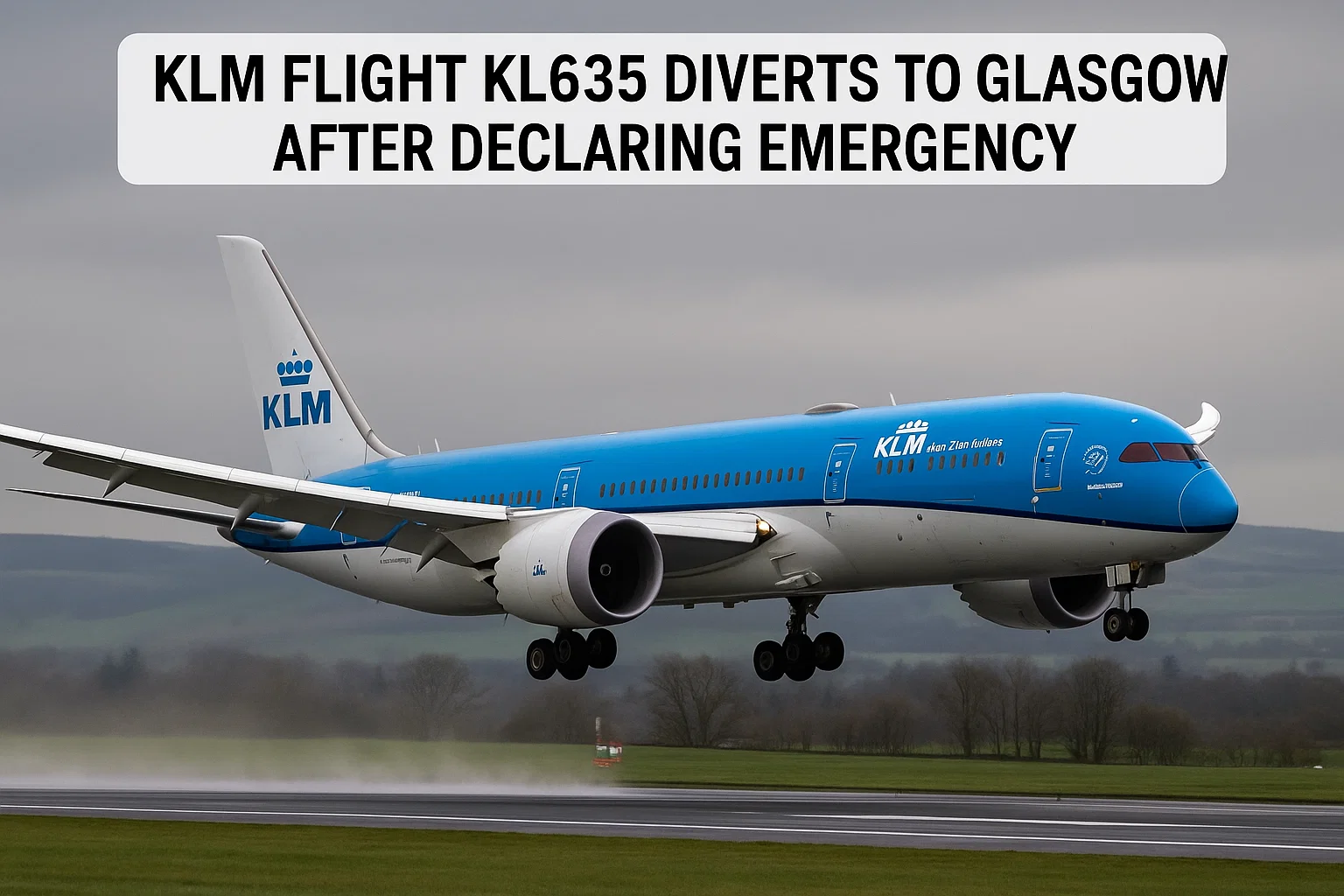
At 4:15 am, the aircraft flew from Shifol. It was a dawn flight to the US, as was the initial plan for Nevada. The pilots changed their minds, and instead of continuing all the way to Las Vegas, they returned to the north and landed in Glasgow. This is the same that transpired in a real sense for diversity and how those people on the board were preserved by the crew and teams at the airport.
Why KLM Flight KL635 Declared an Emergency
There is no formal confirmation at this time, but initial reports and passenger accounts converge on two possible triggers:
- Medical Emergency: It is likely that a passenger required medical treatment. This is the most common cause of variations.
- Technical issue: Flight data is likely to indicate warnings related to cabin pressure, perhaps due to a faulty sensor.
During the circulation of conflicting information, KLM later described the turn as a precautionary measure and emphasized that passenger safety was never compromised.
Understanding the Squawk 7700 Code
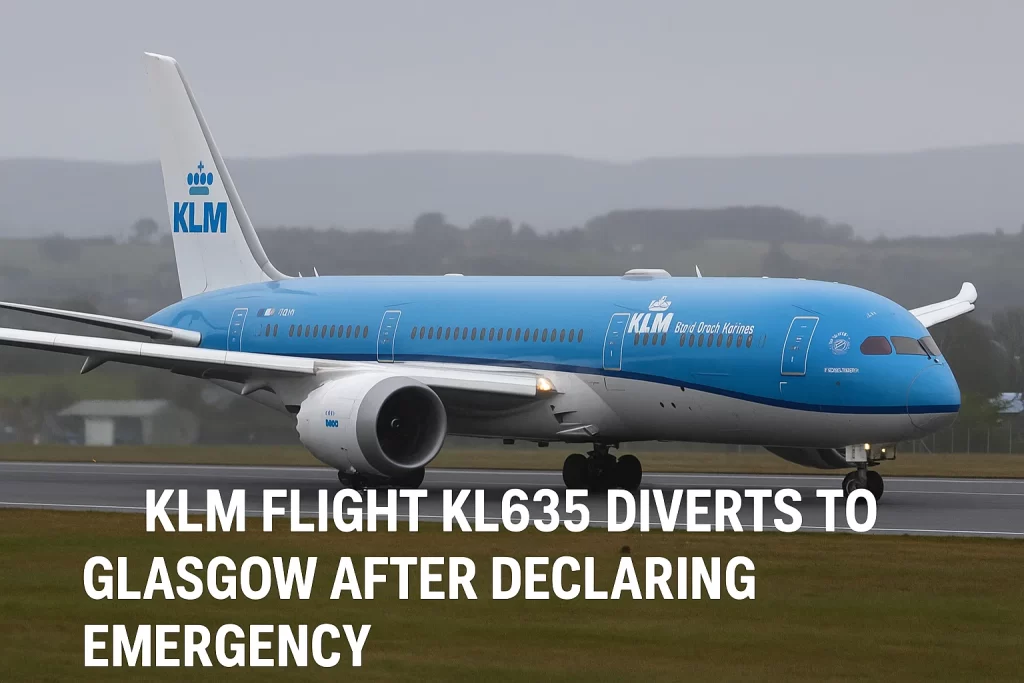
At a distance of about 34,000 feet north of Scotland, the flight crew put the key in the transponder of the aircraft in the squawk 7700. Therefore, there is a universal code for a general emergency.
- Priority Return: It immediately informs air traffic control to give priority to the landing of that specific aircraft.
- Reduces many conditions: squall 7700 may be necessary for medical issues, mechanical defects or threats for safety.
By launching the code, the pilots guaranteed their ability to make a quick landing at the nearest appropriate airport.
Why Glasgow Was Chosen for the Diversion
Glasgow Airport is the nearest airport that can accommodate the long runways available in Boeing 777-200er, Glasgow, modern features and a trained emergency team. The crew will be able to choose Glasgow and ensure immediate medical or technical assistance if needed.
Timeline of Events on May 24, 2025
- 1:00 PM – Flight KL635 Amsterdam leads from Shifol Airport, Las Vegas.
- 5:00 pm – declared emergency over North Scotland.
- 5:10 PM – Squolk 7700 set, directs the flight to ATC Glasgow.
- 5:35 PM-BOING 777-200er (Registration Ph-BQO) Land safely at Glasgow Airport.
- 5:40 PM – Emergency teams and passengers are checked near the aircraft.
- Passengers start leaving the aircraft at 6:00 pm. The medical staff is to help help when needed.
What Passengers Experienced During the Diversion
Loadingblackhuman Many passengers first appeared in the sea. Suddenly a dip and turn raised some questions in his mind, but communication from the crew in a calm manner from communication destroyed that concern.
- A passenger posted on social media: “We were on half the way on the Atlantic when the captain’s voice came into the air, calm but stressful, telling us that we are making an emergency landing in Glasgow.
- It was unpredictable, but everyone was calm, helped by the crew.” The pilots gave positive comments to the crew on the board, updated the passengers and made them comfortable during diversion.
Glasgow Airport’s Rapid Response
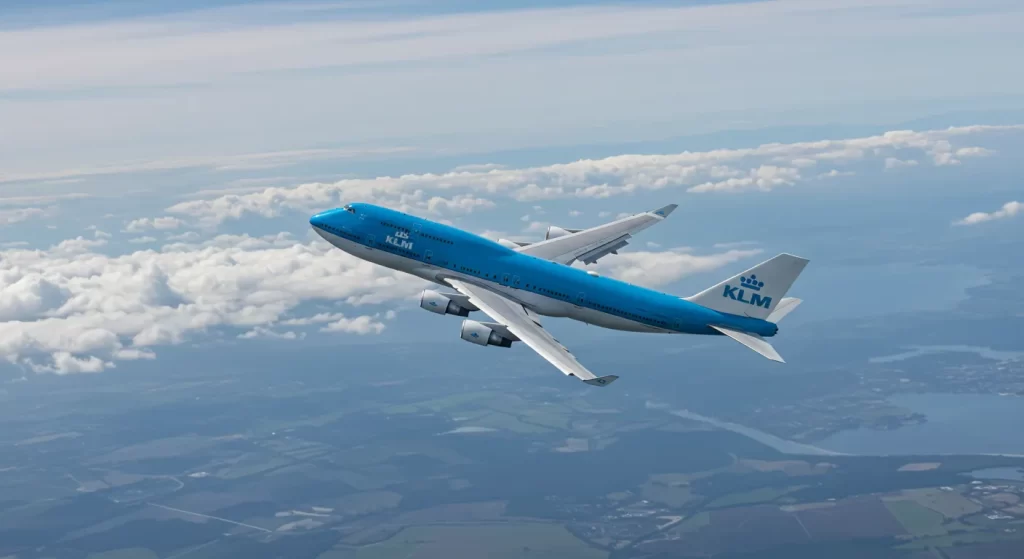
By the time the aircraft landed, emergency services were already next to the runway:
- Fire trucks and paramedics are ready to act immediately if needed.
- Security teams are ensuring smooth coordination on the ground.
Glasgow’s preparation meant passengers disembarked safely and quickly, with no unnecessary delays.
The Aftermath Support for Passengers
While all the passengers reached security on the ground, no one was injured in any way, which meant that the cancellation of the original flight to Las Vegas created more than 200 trapped passengers, but with an immediate response by KLM.
By the time the airplane landed, emergency services were already on the runway:
- Fire trucks and paramedics can jump into the correct action if needed.
- Security teams worked on the ground together.
Due to the readiness of Glasgow, the passengers came out safely and fast and no unnecessary holdups were done.
Common Reasons for In-Flight Diversions
Thes
All regular reasons are:,
- Medical emergency, such as heart attack, severe allergic reactions, or other sudden conditions arising.
- Technical defects, engine problems for example, sensor errors or other ‘warnings’ about the aircraft systems;
- Cabin Pressure Warning- A warning that can be obtained as a possible loss of pressure within the cabin.
- Safety Threats – Uncontrolled passengers, smoking or fire ship, etc. which can be diverted to an aircraft.
In this case, although they are still looking at it, it did not proceed due to a security protocol..
KLM’s Official Response
The spokesperson said the diversion was precautionary. Its passengers are always at the top for KLM. Standard emergency measures were taken by the crew. The Glasgow Ground Staff did a tremendous job in reducing any kind of discomfort.
Lessons from the KL635 Diversion
- Safety Comes First: The decision to land early underscores how a more serious incident could have.
- Crew Training Works: The calm and professional reaction to the situation is bound to have calmed.
- Preparing the airport was crucial. Glasgow quickly getting ready for the flight helped lessen any possible risks.
The Bigger Picture: Aviation Safety Protocols
Pilot Training: Claims are in regular practice of practice in training.
- Advanced Technology: Aircraft sensors, even though they are defective, is usually seen that something is wrong and the aircraft does not stop.
- Global Standards: There are international rules for following security responses everywhere.
The KLM KL635 case reminds us of the fact that systems work and passenger life is preferred above all.
Passenger Stories and Social Media Reaction
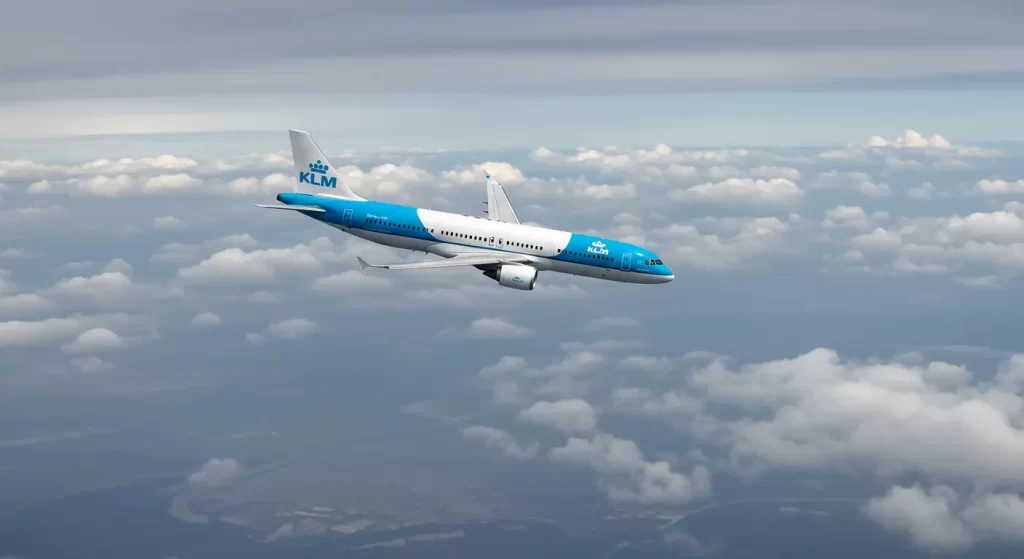
Within hours, the posts about the bend of KLM flight KL635 began to roam online.
- After landing, videos of airplane’s taxis went viral. T
- his gave the entire incident a humanitarian side, which turned a technical aviation story into a reliable experience.
A tweet stripped it: “First time scary, but I am grateful to a crew that keeps us safe and calm.”
What This Means for Future Flights
If you are a long -lasting traveler, such incidents can serve as a reminder: such landscapes are rare, but can be in any place and not necessarily close to your destination. The smallest way of safety always takes precedent, no matter how much time it is. Airlines have measures to travel further after your safety, comfort and any kind of emergency.
Final Thoughts
The bend of KLM flight KL635 may turn into a sensational story in Glasgow, but it is better described as a complete airport with passenger safety procedures, aviation safety protocols, and actually a competent crew.
Although the reason for this was not yet determined, one thing is certainly, from that time, the Emergency was declared for a safe landing in Glasgow, and all the tasks have been taken mainly for protection. It is an assurance for passengers that no unexpected
FAQs
Why did KLM flight KL635 divert to Glasgow?
The crew declared an emergency due to a suspected issue and landed in Glasgow as a safety precaution.
Was anyone injured during the incident?
No injuries were reported. All passengers and crew landed safely.
What is Squawk 7700?
It’s an emergency code pilots use to alert air traffic control to prioritise their landing.
How did KLM assist passengers after landing?
KLM provided hotels, meal vouchers, and rebooked flights for affected travellers.
Was the cause a medical emergency or technical fault?
KLM has not confirmed, but reports suggest either a medical issue or a cabin pressure warning.